
AFOQT Pilot Score — What Number You Actually Need to Get Selected
The AFOQT pilot score requirement you keep seeing cited online — a composite of 25 — is technically accurate and almost completely useless as a planning number. I flew T-38s out of Columbus AFB and spent time on a unit selection board before transitioning out, and I can tell you firsthand that a 25 pilot composite will not get you a pilot training slot at a rated board. Not in any realistic universe. The gap between the Air Force’s published minimums and what actually moves a board to select you is enormous, and most of the articles covering this topic never bother to explain it. This one will.
The Official Minimums vs What Actually Gets Selected
The Air Force Officer Qualifying Test uses a percentile-based composite scoring system. Your raw scores on individual subtests get converted into percentile rankings, and then those percentiles feed into composite scores — Pilot, Navigator, Academic Aptitude, Verbal, and Quantitative. The Pilot composite specifically requires a minimum percentile score of 25. That means you scored higher than 25 percent of the reference population who took a standardized version of the test.
Twenty-five percent. You beat one in four people.
That is the bar to qualify. It is not the bar to compete. Those are two entirely different things, and conflating them is the single biggest planning mistake I see officer candidates make.
Here is what the selection numbers actually look like in practice. Rated board selectees at most Guard and Reserve units — and at ROTC and OTS rated boards — cluster in the 60s through 90s on the Pilot composite. Highly competitive candidates at fighter-heavy units routinely show up with scores in the 80s and 90s. A 60 at a competitive Guard unit with an F-16 mission is going to be a tough sell if the other applicants are stacked. A 75 at a Guard unit flying C-130s in a rural state might be genuinely competitive if your package is otherwise strong.
There is also the PCSM score — the Pilot Candidate Selection Method score — which is separate from the AFOQT but directly incorporates your Pilot composite. The PCSM rolls in your AFOQT Pilot composite, your Test of Basic Aviation Skills (TBAS) results, and your total flight hours. PCSM scores range from 1 to 99, and active duty boards look hard at this number. A PCSM under 50 is going to require a very strong rest-of-package to survive a competitive board. Scores in the 70s and above are where you start looking like a real contender on paper.
Probably should have opened with this section, honestly — the percentile framing is the foundation for everything else in this article. Once you understand that you are not chasing a raw test score but a rank against other humans, the strategy for how to prepare changes completely.
Where the Minimums Actually Apply
The minimum of 25 matters in one specific scenario — it is the floor below which your application gets administratively rejected before a human ever reads it. Think of it as the automated filter. Below 25, you are out regardless of your GPA, flight hours, or letters of recommendation. Above 25, you are eligible. Eligible and competitive are not synonyms.
The Air Force also requires a minimum Pilot composite of 25 AND a minimum Navigator-Technical composite of 10 for rated applicants. Both thresholds must be met simultaneously. But again — meeting minimums gets your file opened. It does not get you selected.
Pilot Composite Score Breakdown
The Pilot composite draws from five specific AFOQT subtests. Understanding exactly which subtests contribute — and how much each one matters — tells you where to concentrate your study time in the weeks before the test.
The five subtests that feed the Pilot composite are:
- Math Knowledge — algebra, geometry, and some basic trigonometry concepts
- Table Reading — fast lookup of values from coordinate-style tables; pure speed and accuracy
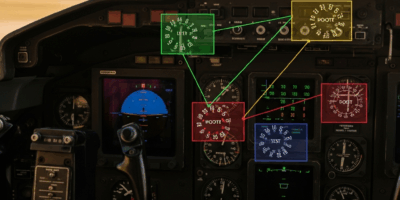
- Instrument Comprehension — reading aircraft instruments, particularly the artificial horizon and compass heading
- Aviation Information — aeronautical knowledge, FAA-level concepts, basic aircraft systems
- Situational Judgment — scenario-based questions about officer decision-making and judgment in ambiguous situations
Motivated by my own mediocre performance on a practice test I found on the AFOQT Study Guide 2023 edition (Trivium Test Prep, roughly $18 on Amazon at the time), I spent about six weeks rebuilding my study approach around these five subtests specifically before I took a diagnostic version with my unit’s testing officer.
The Table Reading subtest catches people off guard. It feels simple — look up a row and column intersection, write down the number — but the time pressure is severe. You have 7 minutes to answer 40 questions. That is 10.5 seconds per question with zero buffer for confusion. People who walk in without practicing Table Reading under timed conditions consistently underperform on it. The fix is mechanical: do 20-minute timed table lookup drills starting three weeks out. Not exciting. Works.
Instrument Comprehension is similarly coachable. If you have zero flight background, the artificial horizon instrument will look cryptic the first time you see it. After two hours of focused study using any private pilot ground school resource — I used the Sporty’s Pilot Shop online course, which runs about $199 for the full private pilot version but has free instrument-specific previews — it becomes pattern recognition. The test shows you a picture. You match it to one of four answer choices. Repetition builds speed.
Where to Spend Your Study Hours
If I had to distribute 40 hours of AFOQT prep time across the five Pilot composite subtests, I would weight it like this:
- Table Reading — 12 hours (pure speed drilling)
- Instrument Comprehension — 10 hours (especially if you have no flight background)
- Aviation Information — 8 hours (factual recall, use flashcards)
- Math Knowledge — 7 hours (focused on weak areas after diagnostic)
- Situational Judgment — 3 hours (read the scoring rubric logic, do sample sets)
Situational Judgment gets the least time because it is the hardest to dramatically improve on through brute-force studying. The questions are designed to surface your values and judgment frameworks, and there is a right-answer logic that you can internalize, but it resists cramming in a way the other subtests do not. Spend enough time to understand the answer patterns — the Air Force favors solutions that preserve mission while taking care of people — then move on.
Math Knowledge is worth honest self-assessment. Some candidates genuinely need 15 hours there. Others have an engineering degree and can run through it in four. Take a cold diagnostic first before you allocate time.
A Note on the Full AFOQT Structure
The full AFOQT has 12 subtests, not just five. The others feed different composites. Word Knowledge and Reading Comprehension feed the Verbal composite. Arithmetic Reasoning, Data Interpretation, and Math Knowledge feed the Quantitative composite. Some subtests — like Block Counting and Rotated Blocks — feed the Navigator-Technical composite and do not touch your Pilot score at all.
This matters for time management. If you are applying as a pilot candidate and not a navigator candidate, do not drain your prep energy on Block Counting at the expense of Table Reading. Know your composites. Study accordingly.
What Else the Selection Board Looks At
The AFOQT Pilot composite and your PCSM score are critical, but they are inputs into a board packet, not the board packet itself. I have sat in selection rooms and watched strong test scores get passed over because the rest of the application told a thin or inconsistent story.
Here is the actual structure of a competitive rated board package:
Flying Hours
This one directly affects your PCSM score, which is worth understanding mechanically. Flight hours are entered into the PCSM formula and can meaningfully lift a borderline AFOQT Pilot composite. The PCSM lookup tables published by AETC show the score trajectory at various hour tiers — 0 hours, 1-20, 21-40, and so on up through 200+. At 0 flight hours, your PCSM ceiling is capped even if your AFOQT Pilot composite is perfect. Getting your private pilot certificate — which typically costs between $8,000 and $15,000 depending on your location and aircraft rental rates — before the board is not required, but it adds real points and demonstrates commitment.
I have seen candidates get 20 hours in a Cessna 172 at a local flight school, around $150–$180 per wet Hobbs hour in most mid-sized cities, and watch their PCSM climb noticeably. Twenty hours is not a huge investment relative to the value it returns in a competitive selection context.
GPA and Academic Record
Most Guard and Reserve units and the rated board processes for OTS and ROTC look for GPAs above 3.0, with competitive candidates often in the 3.3–3.8 range. A technical or STEM degree carries some weight, particularly for fighter or bomber missions, but it is not a requirement. What matters more is that your academic record does not raise questions your interview has to spend time answering.
Leadership and Officer Potential
Boards are selecting future officers, not just pilots. Your leadership record — ROTC involvement, military or civil service, athletic program leadership, significant community responsibility — fills in the picture of whether you can lead people under pressure, not just fly an aircraft. A strong AFOQT score paired with a thin leadership narrative leaves a board wondering. A 72 Pilot composite with a coherent story of progressively responsible leadership often outperforms a 90 with nothing else to say.
Physical Fitness and Medical Qualification
You can score a 99 on the Pilot composite and lose your candidacy entirely to a Class I flight physical. The FAA and Air Force medical standards for pilot training are specific and non-negotiable on certain items. Get a preliminary medical screening through a HIMS AME (Aviation Medical Examiner) before you invest heavily in application prep. Disqualifying conditions include uncorrected vision beyond certain thresholds, blood pressure norms, color vision standards, and others. Know where you stand medically before you spend six weeks drilling Table Reading.
How to Retake the AFOQT if Your Score Falls Short
The Air Force allows one retake of the AFOQT. You must wait at least 150 days between attempts. After two attempts, your scores are locked — you cannot take it a third time under any normal circumstances.
That 150-day window is not a punishment. It is time. Use it correctly and your score will move.
My honest lesson learned here: the first time I reviewed my AFOQT subtest breakdown after a diagnostic session, I treated my weak areas as a list to feel bad about rather than a training plan to execute. That cost me roughly three weeks of effective preparation time. When I finally just mapped the subtests to the composites I cared about, identified the two or three specific areas pulling the composite down, and built a daily drill schedule around exactly those gaps, the improvement was concrete and measurable.
On the question of whether retakes look bad — the answer is nuanced and context-dependent. A retake that produces meaningfully higher scores demonstrates self-awareness and work ethic. A retake that produces roughly the same scores suggests you have reached your ceiling. Boards look at both attempts. If you retake and your Pilot composite goes from a 42 to a 71, that trajectory tells a positive story. If it goes from a 42 to a 44, you have used your second attempt and not helped yourself.
How to Structure a Retake Preparation Period
One hundred and fifty days is approximately five months. That is enough time to also add meaningful flight hours to your logbook, which improves your PCSM independently of your AFOQT. The optimal retake strategy is not just AFOQT remediation — it is treating the 150-day window as a comprehensive package-building period.
- Days 1–30 — Diagnostic work. Identify exactly which subtests are dragging your Pilot composite. Build a study schedule based on the hour-weighting framework above.
- Days 31–90 — Primary study block. Timed drills on Table Reading and Instrument Comprehension. Flight training if financially feasible.
- Days 91–130 — Simulate full test conditions. Take a complete timed practice AFOQT under realistic conditions. Identify remaining gaps. Adjust.
- Days 131–150 — Light review and rest. Do not cram. The test is a speed-and-pattern-recognition instrument; you need to be sharp, not exhausted.
One resource worth knowing — the official AFOQT Form T is the active form as of the most recent test cycle. Practice materials labeled for Form S are slightly dated. When you are buying prep books or using online resources, confirm the form version they are designed around. Small content differences in the subtest structures matter when you are trying to drill specifically for the Pilot composite subtests.
The bottom line on AFOQT pilot scores is this: understand that 25 is a door, not a destination. The candidates getting selected are scoring in ranges that are roughly two to four times the minimum. Know your composites, study the right subtests, get flight hours in your logbook, and build a package that gives the board something to vote yes on. The test is coachable. The selection is competitive. Both of those things are true at the same time, and the candidates who understand both walk into the board in a fundamentally different position than the ones who stopped reading at the published minimum.
Before evaluating pilot competitiveness, verify the official AFOQT minimum scores and separate PCSM requirement.



Stay in the loop
Get the latest afoqt prep updates delivered to your inbox.