What the SDI Is Actually Measuring
The AFOQT has gotten complicated with all the misinformation flying around — especially when it comes to the SDI. You took the test, waited on results, and now there’s a red flag next to something called the Self-Description Inventory that you barely remember filling out. Most prep sites skip it entirely. That’s exactly why you’re lost.
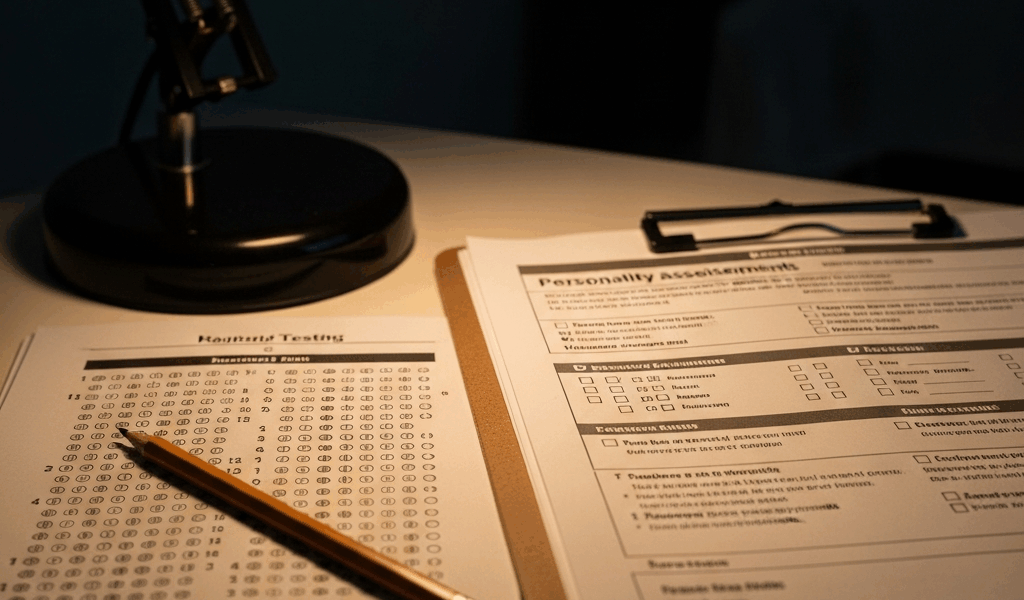
So let me give you the straight answer right now. The SDI is not a knowledge test. Full stop. You can’t study facts for it. No formulas, no practice problems, none of that. It’s a personality and temperament inventory — basically a structured way for the Air Force to see whether your behavioral traits line up with what they expect from officers.
But what is the SDI, exactly? In essence, it’s a series of self-descriptive statements — things like “I prefer working in teams” or “I follow through on commitments” — where you either rate your agreement on a scale or pick which of two statements fits you better. But it’s much more than that. The Air Force is building a full profile of your temperament, your decision-making instincts, how you relate to people, and whether you’re reliable under pressure. There’s no “correct” answer the way there is on the math section.
Your score reflects something specific: how consistently and authentically your responses described your actual traits — things like decisiveness, integrity, stress tolerance, team orientation — across every item in the inventory. Unlike the verbal or quantitative sections, this one correlates your response patterns to traits the Air Force has already identified as predictive of officer success.
Why Your SDI Score Came Back Low
Three reasons cover almost every low SDI score I’ve seen discussed. None of them mean you’re unqualified.
First: inconsistent responses. Frustrated by the sheer length of the inventory, plenty of test-takers speed through it — and accidentally contradict themselves. The SDI includes repeat items and mirrored prompts on purpose. If you strongly agree that you’re a natural leader on item 12, then strongly disagree that you take charge on item 47 — which is measuring the same construct — that inconsistency gets flagged. The scoring model penalizes response variance on parallel items. It reads as either carelessness or as an attempt to game the test.
Second: answering defensively. The Air Force built validity scales into the SDI specifically to catch people trying to present an artificially polished version of themselves. Agreeing with everything that sounds like a good officer trait, disagreeing with anything that sounds weak — that pattern gets caught. The inventory doesn’t want your best self. It wants your actual self, held steady.
Third: not understanding how scoring works. Many people assume higher is always better, like a straightforward point tally. That’s not how this works. Some items are reverse-scored. Some traits require balance — the Air Force isn’t looking for someone recklessly aggressive or rigidly risk-averse. A low score sometimes just means your responses didn’t cluster the way the expected profile requires. That’s fixable. Don’t make my mistake of assuming the test is measuring sheer confidence.
The Consistency Problem and How to Avoid It
Probably should have opened with this section, honestly. Most low SDI scores trace back to consistency failure — and that’s the one thing you can actually fix before a retake.
Your job when you sit down for another attempt is to respond as a stable, coherent version of yourself. Not your anxious self. Not your fantasy self. Your real self, held steady across all 220-plus items.
Here’s a concrete approach: five minutes before you open the test interface, write down three to five genuine character traits you’re confident about. Not what you wish you were — what you actually are. Cautious or adventurous? Structured or flexible? Collaborative or independent? Get specific. “I prefer small trusted circles over large groups” hits differently than “I’m the person who always talks to new people at parties.” Lock those traits in mentally before item one.
Then anchor every response back to that self-concept as you move through the inventory. When item 67 asks about leadership, the question isn’t “What would a good officer say?” It’s “Does this describe me, consistently with how I described myself earlier?” Humans are complex — you can be both independent and collaborative depending on context. That’s fine. Your overall pattern just needs to stay recognizable throughout.
Read slowly. Not paranoia-slow, but deliberately. Two to three weeks of ten-minute practice sessions with personality assessments — the Big Five, CliftonStrengths, whatever you can access — trains your brain to respond thoughtfully without overthinking each individual item. That rhythm matters more than any specific answer.
What You Can Actually Do Before a Retake
Concrete steps exist here. None of them involve pretending to be someone you’re not.
Step one: read the Air Force’s published leadership competencies and officer core values. Integrity first. Service before self. Excellence in all we do. Read them not to memorize answers — but to understand what the inventory is measuring in the first place. If integrity genuinely matters to you, your responses will naturally cluster in that direction without any manipulation needed.
Step two: take a practice personality inventory under real timed conditions. Twenty to thirty minutes, no pausing. This trains your brain to respond authentically instead of second-guessing itself. I’m apparently more risk-tolerant than I thought I was — discovered that during a timed Big Five session — and locking that in changed how consistently I responded on similar items afterward. Knowing your own patterns is the whole point.
Step three: the night before your retake, don’t cram anything. Sleep — real sleep. Do something physical. Eat actual food, not a vending machine breakfast at 0600. A clear, rested mind responds more consistently than an anxious, exhausted one. Personality inventories measure your baseline temperament. Showing up wrecked from stress gives them a skewed read on who you actually are.
How the SDI Fits Into Your Overall AFOQT Score
Before you spiral: the SDI does not feed directly into your Pilot, Navigator, or other AFOQT composite scores. Those are separate, knowledge-based calculations entirely.
The SDI runs on a parallel track. It’s evaluated as part of the officer selection process — not folded into your composite. That’s worth sitting with. A 95th percentile Quantitative score stays exactly where it is regardless of an SDI flag. The SDI is a screening tool used alongside your composites during board review, not instead of them.
That said — a legitimately low SDI raises concerns. It signals either inconsistent self-perception or response validity issues. Boards notice. So fix it.
Your actual action plan: figure out where consistency broke down on your first attempt. Anchor yourself in real self-knowledge — not aspirational self-knowledge. Retake it rested and clear-headed. Keep your other composites exactly where they are. That’s what makes this problem endearing to people who’ve been through it — it’s genuinely solvable once you understand what’s actually being measured. So, without further ado, get started on that five-minute self-assessment. You’ve got this.



Stay in the loop
Get the latest afoqt prep updates delivered to your inbox.