“`html
Are Calculators Actually Allowed on the AFOQT
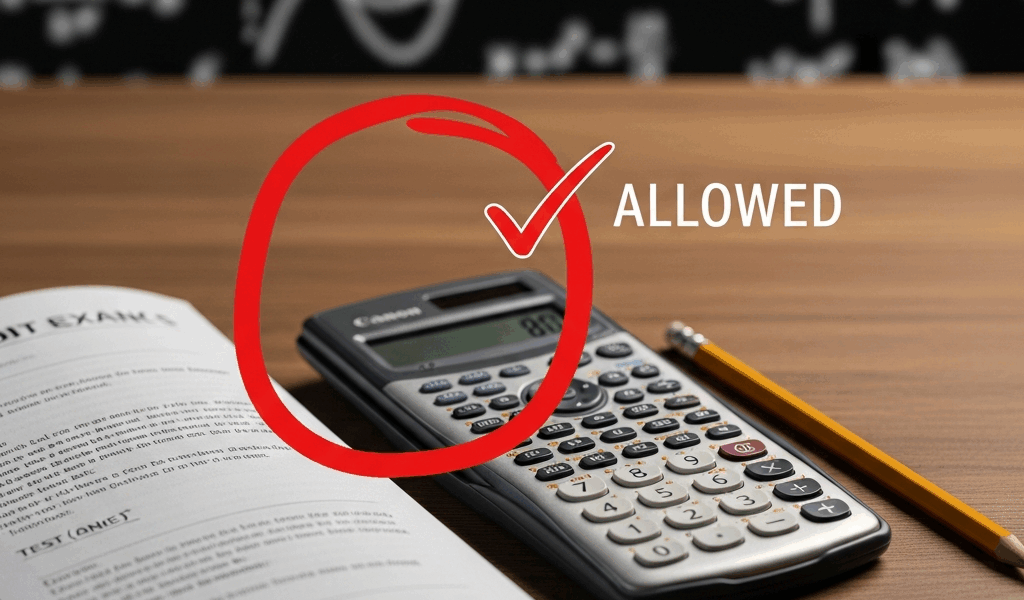
Yes, calculators are allowed on the AFOQT math section — but here’s what trips people up. They’re permitted with restrictions significant enough that I nearly bought a graphing calculator before actually researching what’s allowed. Spent three months prepping for this test, and the confusion around calculator rules is completely avoidable once you know what you’re looking for.
The Air Force Office of Special Investigations explicitly permits basic scientific calculators during the quantitative section. That’s the good news. Your calculator must be non-programmable, non-graphing, and missing most of the features you probably think are standard. That’s the catch.
The math section of the AFOQT includes arithmetic, algebra, geometry, and word problems — you can use a calculator on all of these. The verbal section? No calculator allowed. Technical sections don’t require one either. It’s only the quantitative math portion where this policy applies.
Test centers vary in how strictly they enforce this rule. Some are rigid about it. Others are lenient. I’ve read reports from test-takers who used a $12 Casio with zero problems, and others who had to swap calculators mid-test because their model had a feature the proctor deemed restricted. Official guidance exists, but enforcement is inconsistent enough that you should prepare for both scenarios.
What Calculator Functions You Cannot Use
This is where I made my first real mistake — I assumed “non-graphing scientific calculator” just meant no graph display. It means considerably more than that.
Here’s what’s prohibited:
- Graphing capabilities or display screens larger than a standard LCD
- Programming functions or the ability to store custom code
- Equation solvers or systems of equation functions
- Symbolic algebra or calculus operations
- Wireless connectivity or the ability to transfer data
- Financial calculation modes or business functions
- Matrix operations beyond basic display
- Calculus derivatives or integral functions
The Air Force wants to test your mathematical reasoning, not your ability to let technology handle the thinking. A calculator that solves equations for you eliminates the actual problem. That’s why they’re banned.
What you can use: basic arithmetic, square roots, exponents, trigonometric functions (sine, cosine, tangent), logarithms, percentages, and basic statistical functions like mean and standard deviation. These operations help with speed but don’t eliminate the actual math involved.
This distinction matters because many “scientific calculators” sold at Target or Walmart include equation-solving capabilities that technically violate the rules, even though they advertise basic scientific functions. That’s why specific model recommendations matter on test day.
Best Calculator Models That Pass AFOQT Rules
After reading through dozens of test-day reports, three models consistently appeared as approved and problem-free.
Casio FX-300ES Plus — Probably your best bet. Price: $14–18 depending on where you buy it (Amazon, Walmart, office supply stores all carry it). It’s a basic scientific calculator with 252 functions. Does everything you actually need — trig functions, exponents, square roots, fractions. Doesn’t have equation solvers, graphing, or programming. Every test-taker report I found about this model mentioned zero proctor issues. This should be your default choice.
Texas Instruments TI-30Xa — Price range $13–17. This is the older workhorse model — less flashy than the Casio, but absolutely bulletproof in terms of rule compliance. It has fewer functions overall (around 60), which actually makes it safer from a proctor perspective. If you want zero ambiguity, grab this one. It’s gray, plastic, feels like it was made in 2003 (because it basically was), and that’s exactly why proctors approve it immediately.
Casio FX-115ES Plus — Price: $25–35. This is a step up in features (279 functions), and it’s still non-graphing and non-programmable. Includes more complex trig and logarithm work. If you’re confident in your math ability and want a slightly more capable calculator, this works. Still under the restriction line, though some test centers might scrutinize it longer because it looks more advanced than the FX-300. I haven’t found reports of it being rejected, though.
My recommendation? Buy the Casio FX-300ES Plus for $16. Don’t overthink it. It’s approved everywhere, test-takers consistently report zero issues, and you won’t waste energy on test day worrying whether your calculator gets flagged.
What to Do if Your Calculator Is Rejected
This happens — not often, but it does. Probably should have opened with this section, honestly, because it’s the anxiety point that keeps people awake the night before the test.
Here’s the scenario: you arrive at the test center with your Casio FX-300. The proctor picks it up, looks at it, and says something vague like “I’m not sure about this one.” What happens next?
Step one is don’t panic. You have a legitimate calculator designed to pass these rules. The proctor might not be fully trained on the technical distinctions, or they might be erring on the side of caution.
Ask directly: “What specifically about this calculator doesn’t meet the requirements?” This forces them to articulate a real reason rather than a vague concern. Often, they’ll realize they were being overly cautious and approve it. If they have a genuine technical concern — say they think they see a graphing mode — you can explain the actual functions calmly.
If rejection stands, request a written note of which calculator features violated the rules. You’ll need this for the appeal process. Refuse the test under protest if you feel the decision was unfair. The AFOQT allows appeals, and having documentation makes that vastly easier.
Can you request to use mental math instead? Not formally, no. If your calculator gets rejected, you continue without one. But here’s the thing — if you’ve prepared properly, you can take the test without a calculator. It’ll be slower, but you won’t fail because of it.
The appeal process works like this: contact the testing facility’s commanding officer within five business days with your documentation. Include photos of your calculator’s spec sheet, your proctor’s written note, and a statement that you believe the rejection violated official policy. Most appeals are resolved within 10 days, and you’ll either get approval to retake with your original calculator or receive guidance on which models are acceptable at that specific location.
Has this happened to me? No. But I’ve read enough test-day reports to know it’s a real enough possibility that you should be mentally prepared for it.
Practice Math Without a Calculator First
Here’s the strategic angle that actually solves the anxiety: don’t rely on the calculator from day one of your prep.
Spend your first four weeks practicing AFOQT math problems without a calculator. Learn to do long division efficiently. Get comfortable with fraction operations. Force yourself to estimate square roots rather than computing them exactly. This builds the actual mathematical reasoning the test measures.
Only after you’ve built that foundation should you introduce the calculator. Then use it to verify answers and handle complex exponent or trigonometric calculations. The calculator becomes a tool for confirmation and speed, not a crutch covering weak fundamentals.
Why does this matter for the calculator rules issue? Because if there’s any doubt about your calculator’s compliance on test day, you won’t panic. You’ve already proved to yourself that you can solve these problems without it. The calculator is a bonus, not a necessity.
Test day anxiety about calculator rules typically stems from uncertainty about your own math ability. Fix the math ability part, and the rules become irrelevant. You’ll know your calculator works, but more importantly, you’ll know you don’t strictly need it.
Buy the Casio FX-300ES Plus. Practice without it first. Then on test day, use it confidently. That’s the full strategy, and it eliminates nearly all the friction in this scenario.
“`




Stay in the loop
Get the latest afoqt prep updates delivered to your inbox.