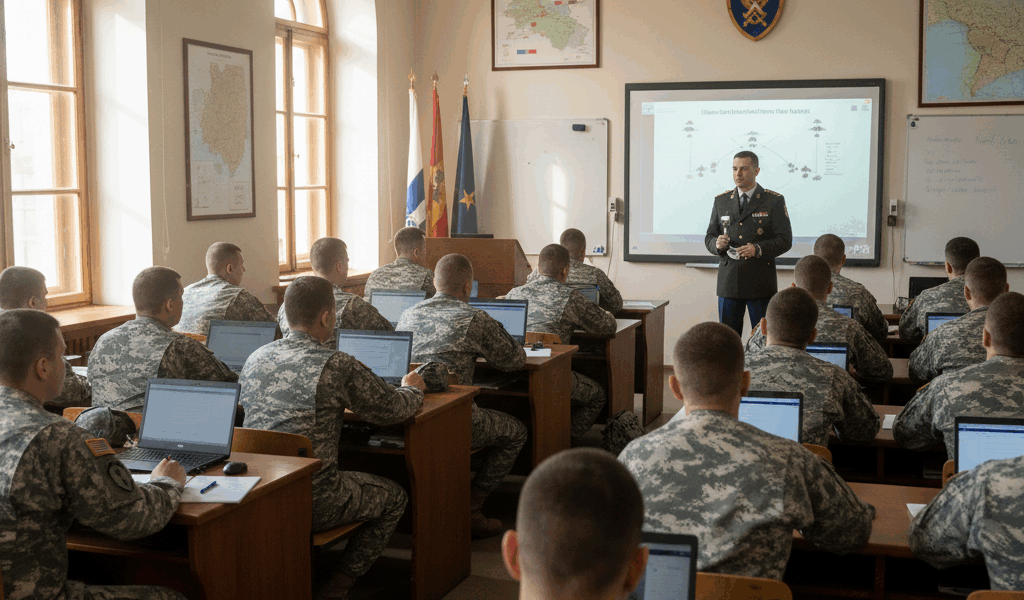
Military education has gotten complicated with all the “boot camp = the whole story” assumptions civilians carry without examining them. As someone who’s spent years studying military institutions, their academic programs, and the research they produce, I’ve learned everything there is to know about what the military education system actually looks like from the inside — and why it consistently surprises people who assumed they already knew. Today, I’ll share it all with you.
Military education is one of those subjects where most civilians operate on assumptions shaped by movies and TV rather than anything close to reality. The gaps between the popular image and the actual system are significant — and in some cases, the real picture is more impressive than the fictional version.
The Military Is One of the Largest Higher Education Systems in America
Most people are aware that West Point, Annapolis, and the Air Force Academy exist. Fewer realize the full scale of military education in the United States. That’s what makes the military education system endearing to us who study it — the scale is genuinely surprising once you add everything up. The military operates four major service academies producing approximately 4,000 officers per year. It runs the Reserve Officers’ Training Corps (ROTC) program at over 1,700 colleges and universities, commissioning another 15,000+ officers annually. The senior professional military education system — Command and Staff Colleges, War Colleges — educates thousands of mid-career and senior officers in graduate-level programs accredited by civilian academic bodies.
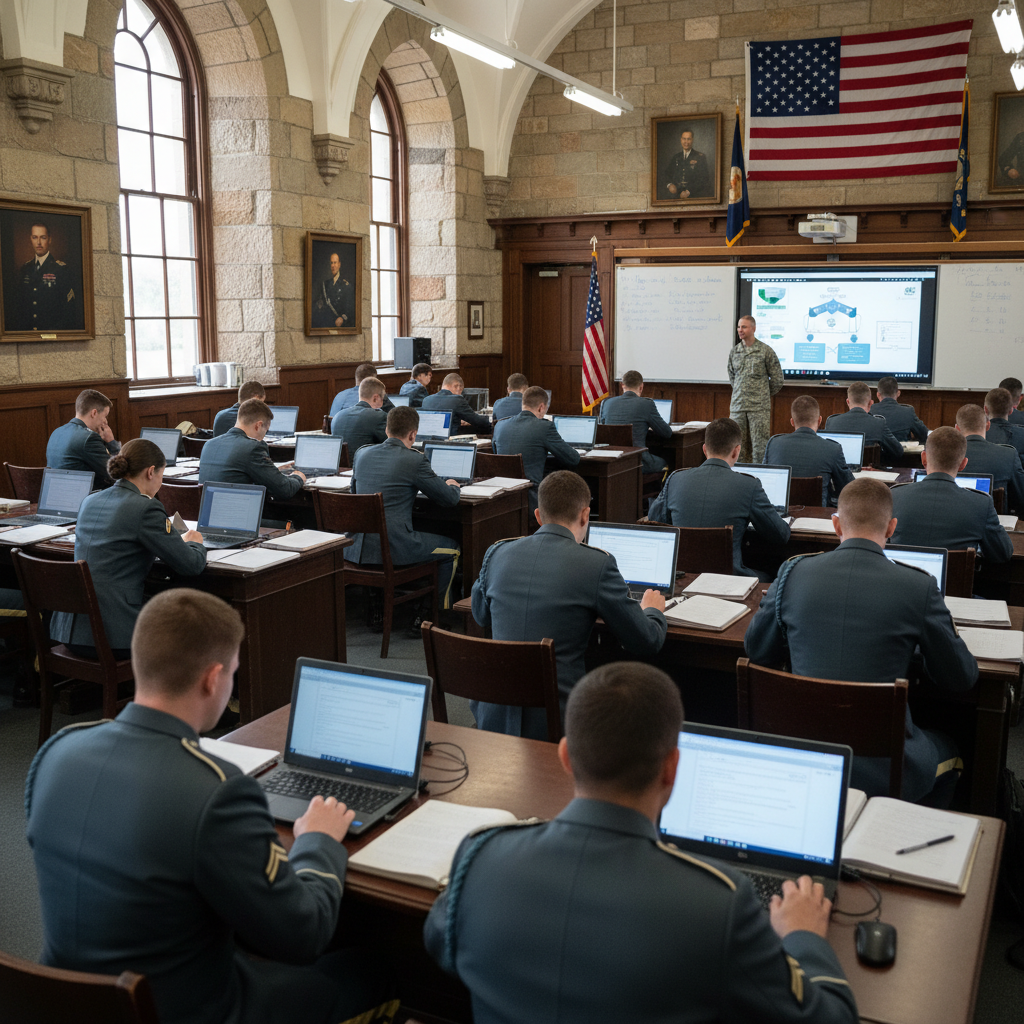
The enlisted education system is separately massive. Every military occupational specialty has associated training schools. The Army alone operates schools teaching everything from combat engineering to healthcare to signal intelligence. Probably should have led with this number, honestly — the training infrastructure represents an educational enterprise comparable in scale to a large state university system, operating continuously and producing graduates who enter the workforce with certified skills.
Military Colleges and Universities Beat Most Civilians’ Expectations
When civilians think about military officers’ academic backgrounds, they often default to assumptions about rote learning, hierarchy, and limited intellectual creativity. The actual academic experience at the service academies is substantially more rigorous and more creative than this stereotype suggests. West Point graduates take four years of a core curriculum that includes four semesters of mathematics, six engineering courses, humanities requirements, and leadership coursework, combined with 40+ hours per week of military training. The academic load is comparable to engineering programs at selective civilian universities.
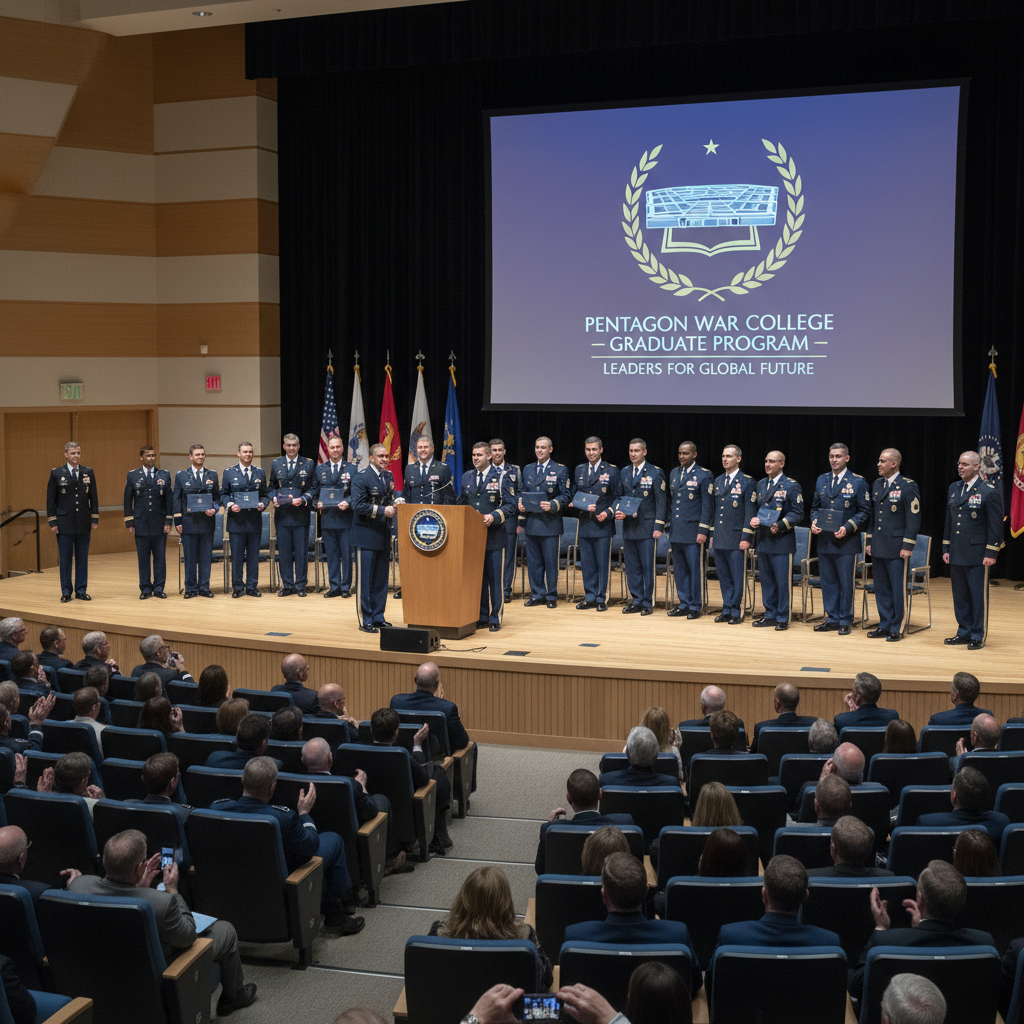
I’m apparently one of the few people who was genuinely surprised by the War College curriculum. The senior professional military education system — particularly the Army War College, Naval War College, and Air War College — produces graduate research and analysis that influences U.S. defense policy directly. The curriculum includes economics, international relations theory, interagency operations, and coalition warfare — disciplines that require sophisticated analytical thinking rather than the rote memorization civilians often assume defines military education. Officers who complete War College often describe it as among the most intellectually demanding experiences of their careers.
Civilian-Military Education Partnerships Are More Extensive Than Most People Know
Frustrated by the assumption that military and civilian academia are separate worlds, I spent considerable time documenting just how extensively they interact. The relationship is more bidirectional than the public generally realizes. Major research universities — MIT, Stanford, Johns Hopkins, Carnegie Mellon — conduct substantial defense-related research funded by DoD agencies. The Defense Advanced Research Projects Agency (DARPA) funds research at civilian universities that has produced technologies including the internet, GPS navigation, voice recognition, and advanced materials.
In the other direction, military personnel regularly attend civilian graduate programs. The military services send officers to Ivy League and other selective graduate programs in law, medicine, business, and policy. The fellowship programs — White House Fellows, Congressional Fellows, Council on Foreign Relations International Affairs Fellows — frequently include military officers alongside their civilian peers.
The effect of this exchange on both sides is real. Civilian universities benefit from the perspective and experience of military students who bring operational context to discussions of policy and technology. The military benefits from officers who have engaged deeply with civilian academic and policy communities. The boundary between military and civilian intellectual life is more permeable than the popular image of military culture suggests — and this permeability benefits both communities in ways that rarely get acknowledged in either direction.



Stay in the loop
Get the latest afoqt prep updates delivered to your inbox.