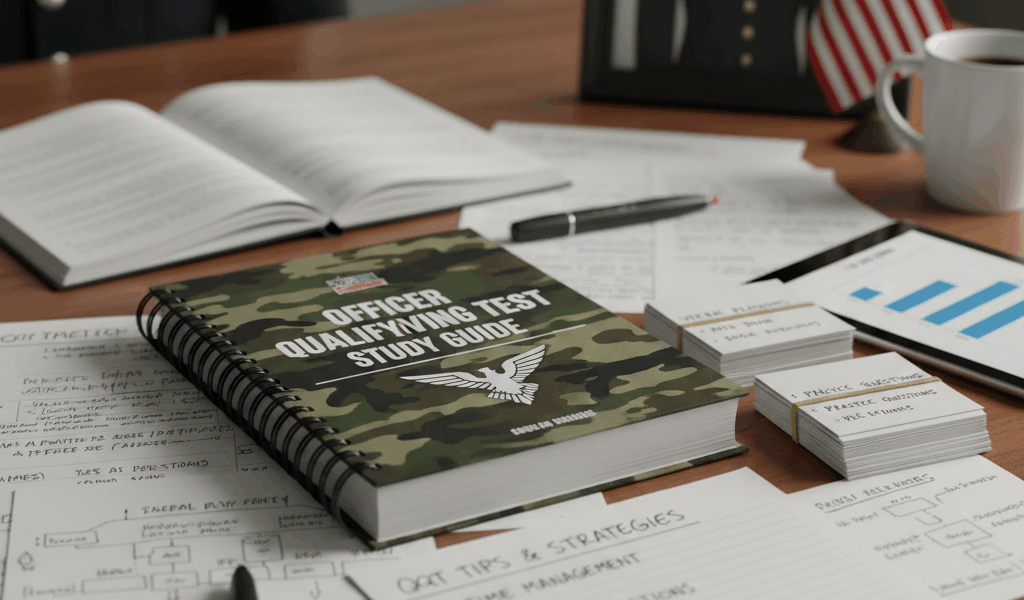
AFOQT preparation has gotten complicated with all the advice flying around online. As someone who’s worked with dozens of candidates over the years, I learned everything there is to know about what actually works versus what sounds good but doesn’t help. Today, I will share it all with you.
The candidates who score well share certain preparation habits. The ones who struggle tend to skip the same fundamentals. Here’s what separates success from disappointment.
Tip 1: Understand What You’re Actually Being Tested On
The AFOQT isn’t one test—it’s twelve subtests packaged together, and your scores get combined into five composite scores that the Air Force actually uses. Those composites are Pilot, Combat Systems Officer (CSO), Academic Aptitude, Verbal, and Quantitative.
Most candidates want Pilot and CSO scores, so they focus on instrument comprehension and aviation information. That’s fine, but don’t neglect the other subtests. Academic Aptitude affects your competitiveness for commissioning. Verbal and Quantitative scores matter for specialized career fields.
Before you start studying, figure out which composite scores matter for your goals. Probably should have led with this section, honestly. A candidate applying to pilot training needs different preparation emphasis than someone aiming for intelligence officer. Target your study time toward the subtests that feed your priority composites.
Tip 2: Start Earlier Than You Think Necessary
Six weeks of serious preparation works for most candidates. Three months is better. The mistake I see constantly is waiting until a month out, then panicking when practice scores don’t improve fast enough.
That’s what makes early preparation endearing to us instructors—it actually works. The AFOQT includes content requiring genuine knowledge acquisition, not just test strategy. Table reading requires developing a specific visual scanning technique. Instrument comprehension demands familiarity with flight instruments most candidates haven’t seen. Aviation information tests knowledge that takes time to absorb.
Starting early lets you identify weaknesses before time pressure makes addressing them stressful. A candidate who realizes in week two that they need vocabulary work has time to systematically build it. That same realization a week before the test creates only anxiety.
Tip 3: Take Full-Length Practice Tests Under Realistic Conditions
The AFOQT takes over three and a half hours. Most practice sessions don’t. That disconnect catches candidates by surprise.
Mental fatigue affects performance on later subtests more than people expect. The arithmetic reasoning section hits hard after you’ve already ground through verbal analogies, word knowledge, math knowledge, and reading comprehension. Your brain isn’t fresh by then.
At least twice during preparation—preferably more—take a complete practice test in a single sitting. Time each section properly. Take the same short breaks the actual test allows. Experience what subtest 10 feels like after subtests 1 through 9 have worn you down.
This practice reveals which sections suffer most from fatigue. Some candidates find a brief bathroom break resets focus. Others need to pace morning coffee intake to maintain alertness without creating bathroom urgency. These personal discoveries only come from realistic practice.
Tip 4: Don’t Neglect the Aviation-Specific Sections
The instrument comprehension and aviation information subtests seem impossible if you’ve never flown. But they’re absolutely learnable. The Air Force provides these sections to assess your potential for aviation training—not to test whether you already know how to fly.
For instrument comprehension, find a flight simulator or instrument training app. Spend time understanding what happens to the attitude indicator, altimeter, and heading indicator during different maneuvers. The artificial horizon especially confuses people who’ve never seen one. When the aircraft banks left, the horizon line tilts right. When the nose points down, the horizon line rises. Practice until this becomes intuitive.
Aviation information requires straightforward memorization of aircraft components, flight physics, and history. Flash cards work. The content isn’t complex—it just needs to get from study materials into your head.
Candidates with zero aviation background routinely achieve competitive scores through deliberate practice. Don’t assume you’re at a disadvantage because you’ve never flown.
Tip 5: Manage Test Day Logistics Like They Matter
Because they do. The most prepared candidate performs poorly if they arrive stressed, hungry, or sleep-deprived.
Know exactly where the testing center is and how long the drive takes during test-time traffic. Arrive early enough to find parking and navigate to the right room without rushing. Bring your ID and required documentation—arriving without proper paperwork means rescheduling.
Eat before the test but avoid heavy meals that induce drowsiness. Caffeine helps some candidates and hurts others—know your category from practice test experience, not test day experimentation.
Get adequate sleep the night before. Sounds obvious, but candidates regularly report studying late before their test. Your brain consolidates learning during sleep. Last-minute cramming isn’t worth the fatigue penalty.
Dress in layers. Testing rooms run hot or cold unpredictably. Discomfort distracts from an already demanding task.
Additional Considerations
The AFOQT can only be taken twice, with a waiting period between attempts. This limitation means your preparation strategy should prioritize being fully ready for your first attempt rather than treating it as practice for a second try.
Previous scores remain on your record. Retakes can improve composites, but evaluators see both sets of scores. This visibility creates incentive to prepare thoroughly before that first attempt.
Study groups help many candidates. Finding others preparing for the same test lets you quiz each other, share resources, and maintain motivation during the long preparation period. ROTC detachments and recruiting offices can sometimes connect candidates who want study partners.
The Bottom Line
Candidates who follow these fundamentals—understanding test structure, starting early, practicing realistically, preparing for aviation sections, managing logistics—typically achieve scores that keep career options open. The AFOQT isn’t mysterious or unfair; it just demands systematic preparation that cramming can’t provide.
Your future Air Force career may depend on this one test. Treat preparation with appropriate seriousness, and you’ll walk into that testing room knowing you’ve done everything possible to succeed.




Stay in the loop
Get the latest wildlife research and conservation news delivered to your inbox.