
AFOQT Aviation Information
The AFOQT aviation section has gotten complicated with all the generic study guides flying around. As someone who obsessed over every aerodynamics concept and aviation term before my own test, I learned everything there is to know about dominating this section. Today, I will share it all with you.

Purpose and Structure of the AFOQT
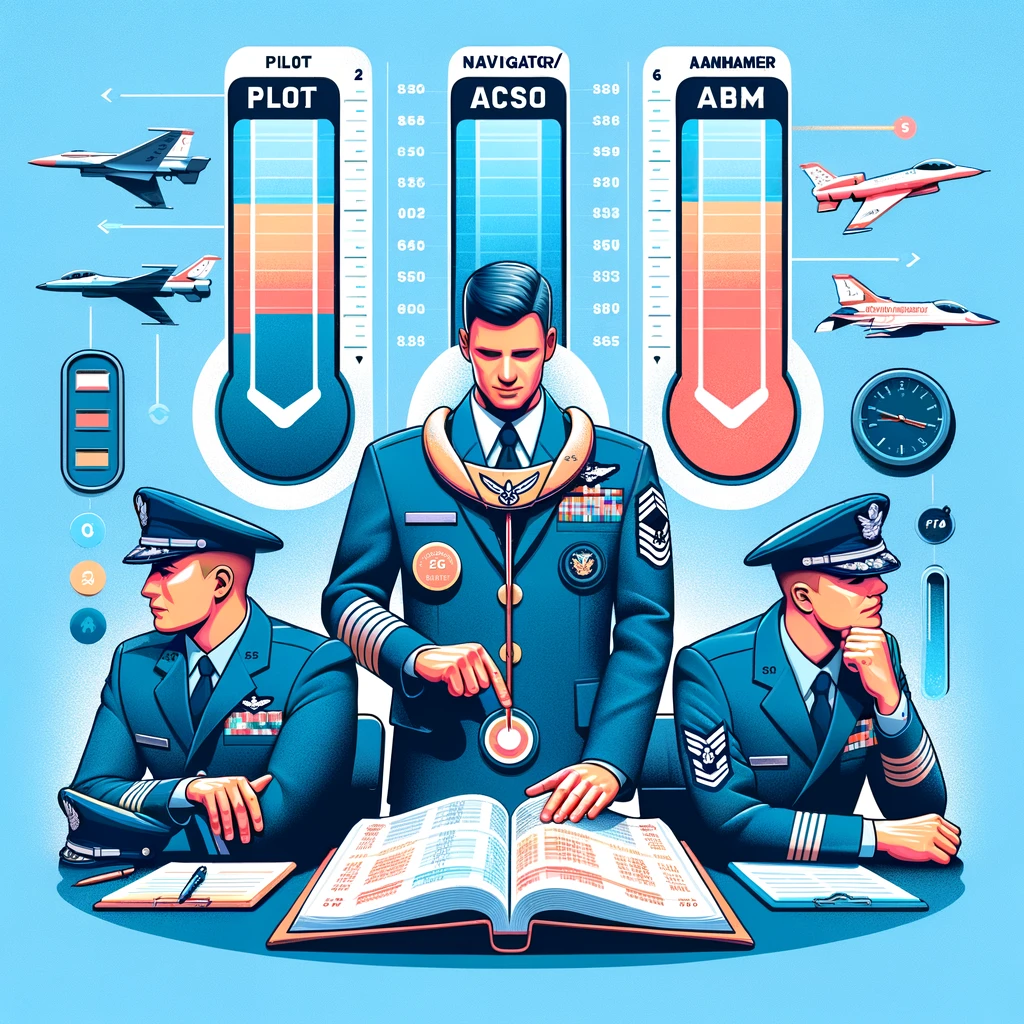
The AFOQT measures a whole range of aptitudes, but for those of us chasing aviation careers, certain sections carry extra weight. The test specifically evaluates spatial orientation, aviation knowledge, and instrument comprehension — the exact skills you’ll need in a cockpit. These sections feed directly into your Pilot and CSO composite scores, which are what selection boards care about most when filling rated slots.
The aviation-relevant sections include:
- Pilot composite subtests
- Navigational composite subtests
- Instrument Comprehension
- Table Reading
- Aviation Information
Aviation Knowledge Component
Probably should have led with this section, honestly. The aviation information subtest is where your passion for flight either shines through or doesn’t. It covers principles of flight, aircraft operations, aviation terminology, weather effects on flying, and basic aerodynamics. If you’ve spent time around airfields, read aviation magazines, or played flight sims, you’ve already got a foundation. If not, you’ve got some catching up to do.
What shows up on this section specifically? Expect questions about the four forces of flight — lift, weight, thrust, drag. How ailerons, elevators, and rudders control an aircraft. What happens during a stall. How weather patterns affect flight planning. Basic airport operations and terminology. I found that candidates who genuinely loved aviation did well here naturally, while those who viewed it as just another subtest had to grind harder. Stay current with aviation news and technology too — the test designers don’t live in the past.
Key Areas of Focus
Pilot Aptitude
The pilot section goes beyond just knowing facts about aircraft. It tests whether you can think like a pilot. Can you maintain situational awareness? Do you understand how flight forces interact in real time? Do you grasp how control inputs translate into aircraft movement? Memorizing that ailerons control roll isn’t enough — you need to understand why banking the aircraft changes your flight path and how to coordinate turns properly.
I spent a lot of time studying the Pilot’s Handbook of Aeronautical Knowledge, and it covered everything I needed. The concepts aren’t complicated individually, but there are a lot of them. Start early and build your knowledge base steadily rather than trying to cram it all in the last week.
Spatial Abilities
Spatial orientation is massive for future pilots and navigators. The test evaluates how well you can mentally manipulate objects, interpret maps and instruments, and determine aircraft positioning relative to the ground and other objects. This isn’t something most people practice in daily life, so it needs deliberate training.
Flight simulators are fantastic for building spatial awareness. Even simple ones help your brain get used to interpreting 3D space from 2D instrument readings. I also practiced with block counting exercises and mental rotation puzzles daily. It felt awkward at first, but after two weeks, my spatial processing speed noticeably improved.
Instrument Comprehension
This is where you read cockpit instruments and determine the aircraft’s attitude, heading, and altitude. They show you an artificial horizon, a heading indicator, and sometimes an altimeter, and you have to figure out what the aircraft is doing. Climbing left turn at 090 degrees? Level flight heading south? Descending right bank?
That’s what makes instrument comprehension endearing to us aviation enthusiasts — it’s the closest the written test gets to actual flying. The skill is absolutely trainable. Spend time in a flight simulator focusing solely on your instrument scan. Correlate what the instruments show with what the aircraft is doing. After a few weeks of this, you’ll read those gauges like a dashboard on your car.
Studying for the AFOQT
Here’s my honest preparation advice for the aviation sections. Start six to eight weeks before your test date. Begin with the FAA Pilot’s Handbook — it’s free online and covers everything from basic aerodynamics to weather to navigation. Take practice tests weekly to track your progress. Identify which subtests give you the most trouble and allocate extra study time there.
Review fundamental physics — force, motion, pressure. Understand how Bernoulli’s principle creates lift. Know Newton’s third law as it applies to jet propulsion. Watch YouTube videos that visualize these concepts. The aviation sections reward understanding, not memorization. If you truly understand why an aircraft flies, you can answer almost any question they throw at you even if you haven’t seen that specific question before.
Resources and Support
Good AFOQT prep books are worth every dollar. Barron’s Military Flight Aptitude Tests and the Trivium AFOQT study guide are both solid choices. Online platforms with timed practice tests help you build speed and accuracy under realistic conditions. Some websites offer free practice questions specifically targeting the aviation sections.
Don’t overlook mentorship. If you can find a current or former Air Force pilot or officer willing to talk about their AFOQT experience, that insight is invaluable. They can tell you what actually mattered on test day versus what was noise. ROTC detachment cadre and Air Force recruiters can also point you toward official preparation materials and connect you with other candidates studying for the same test.
Common Challenges
Test anxiety is the number one challenge I see with candidates, especially on the aviation sections. There’s so much riding on these scores that the pressure can be overwhelming. The best antidote? Preparation. When you’ve taken enough practice tests under timed conditions, the real test feels like just another practice run. Your brain has been there before. It knows what to do.
The breadth of topics can feel overwhelming too. Aviation information alone covers aerodynamics, weather, navigation, aircraft systems, and airport operations. Focus on understanding core principles rather than memorizing isolated facts. If you understand how lift works, you can reason through any lift-related question. Comprehension beats memorization every time on this test.
Opportunities Beyond the Test
Crushing the aviation sections of the AFOQT opens doors that stay open for your entire career. A strong Pilot composite makes you competitive for Undergraduate Pilot Training. Good CSO scores open navigator and weapons systems officer paths. Even the Air Battle Manager track requires solid aviation aptitude. These aren’t just jobs — they’re careers that shape who you become as a leader and professional.
The skills you build studying for these sections don’t expire when the test is over either. Aviation knowledge, spatial reasoning, instrument interpretation — these transfer directly into pilot training and beyond. Many Air Force aviators credit their AFOQT prep as the foundation that made them successful in flight school. The work you put in now pays dividends for years to come, whether you stay military or transition into civilian aviation.
Conclusion
The AFOQT aviation sections are tough, but they’re fair. They test real skills that real pilots need. Prepare properly, understand the fundamentals, practice under timed conditions, and walk in on test day knowing you’ve done the work. That confidence alone is worth half the battle. The other half? That’s the knowledge you’ve built through deliberate, consistent preparation. Go earn those scores.
Recommended Drone Gear
ASA Remote Pilot Test Prep – $19.95
Complete prep for the FAA Part 107 exam.
Drone Pilot Log Book – $7.99
Track your flights and maintain compliance.
As an Amazon Associate, we earn from qualifying purchases.



Stay in the loop
Get the latest wildlife research and conservation news delivered to your inbox.